
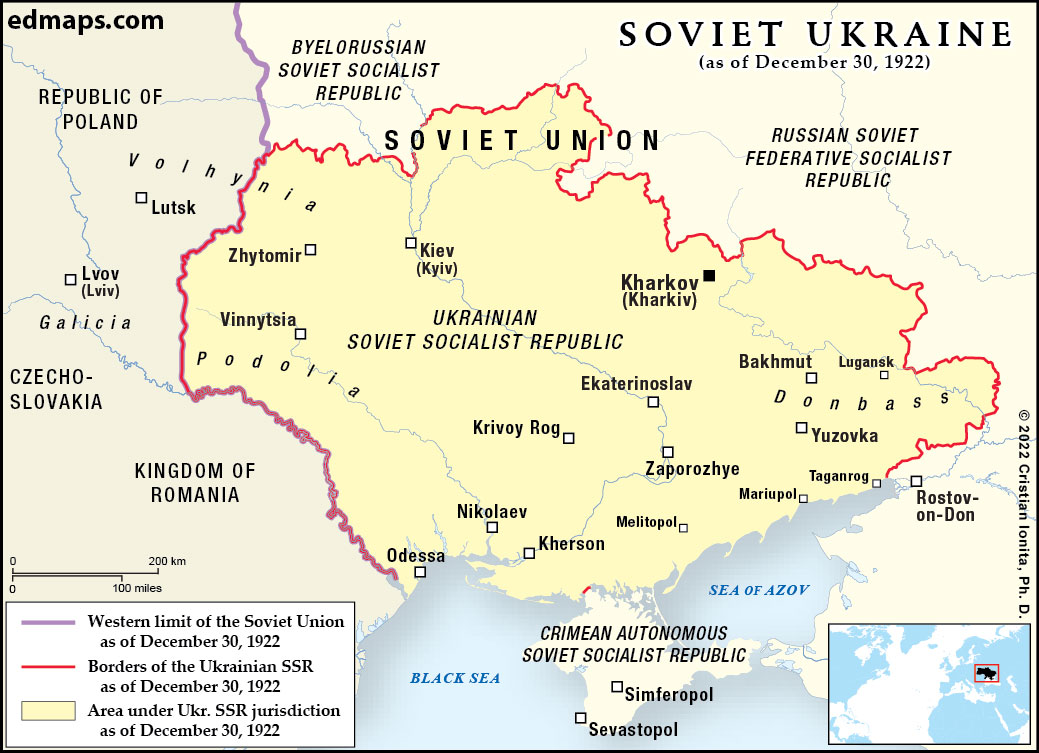
This page presents an original historical map illustrating Soviet Ukraine in December 1922. As one of the founding republics of the newly established Union of Soviet Socialist Republics (USSR), the Ukrainian Soviet Socialist Republic entered a new phase of its history that would profoundly influence its political and territorial development throughout the twentieth century. Designed for educational use, the map offers a clear visual representation of the territorial and administrative conditions that characterized Soviet Ukraine at the birth of the Soviet Union.
See also :
Historical Maps of Ukraine — original historical maps of Ukraine;
More Historical Maps of Ukraine — curated links to historical maps and resources covering Ukrainian history;
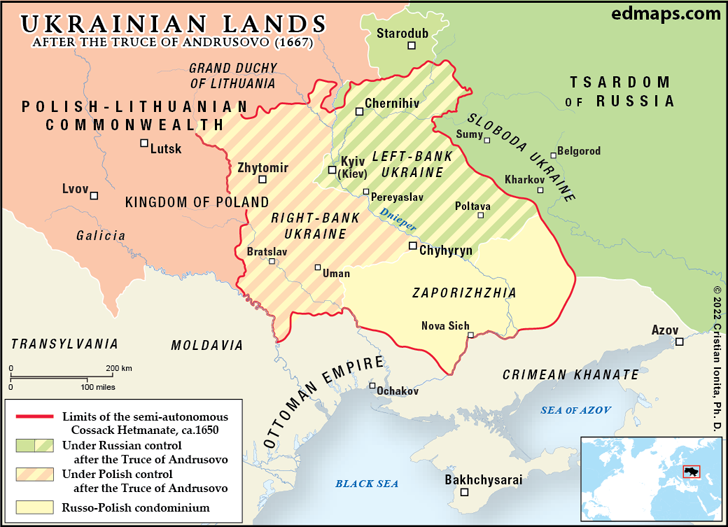
The Ukrainian Lands after the Truce of Andrusovo (1667) — a map of the Ukrainian realm after the Russo-Polish War of 1654-1667;
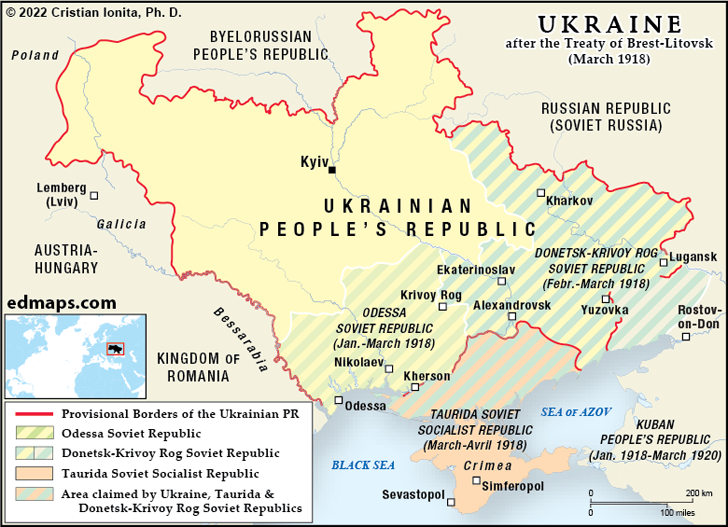
Ukrainian People's Republic (1918) — a map of the Ukrainian state after the Treaty of Brest-Litovsk.
The formation of the Soviet Union in December 1922 fundamentally transformed Ukraine's status from an independent aspiration to a constituent republic within a centralized multinational state. The Ukrainian Soviet Socialist Republic became one of the founding members alongside Russia, Belarus, and Transcaucasia, but this formal equality masked growing Russian dominance and the systematic suppression of Ukrainian national identity.
Initially, Soviet nationalities policy appeared favorable through korenizatsiya (indigenization), promoting Ukrainian language and culture during the 1920s. However, by the early 1930s, Stalin's regime reversed course, implementing aggressive Russification policies. The Ukrainian language faced marginalization in education and administration, Russian became the dominant language of party apparatus and industry, and Ukrainian cultural figures suffered persecution. The 1932-33 Holodomor, while primarily a devastating famine, also served as a tool of denationalization, breaking Ukrainian peasant culture and resistance to collectivization. Millions perished, and survivors faced intensified Russian cultural imposition.
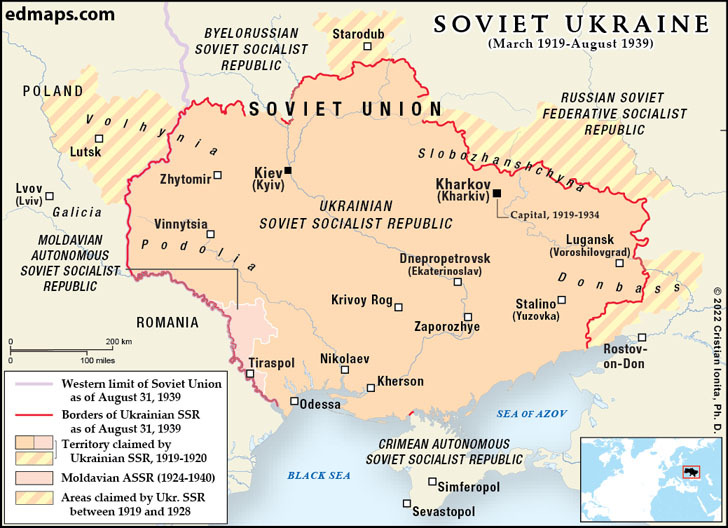
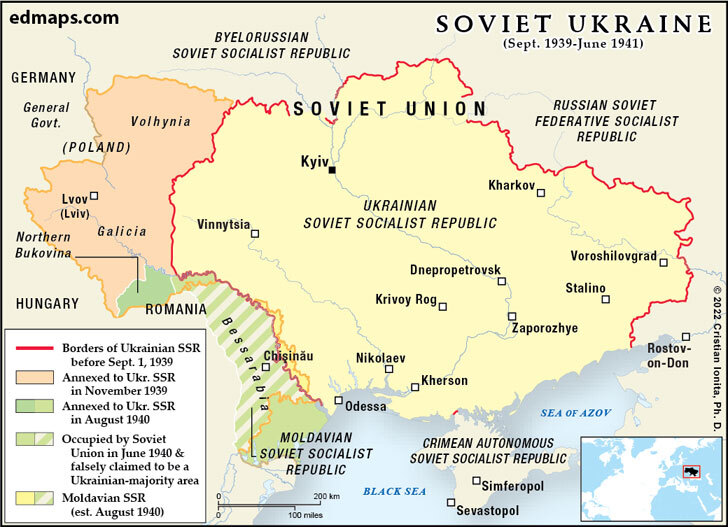
Ukrainian nationalism, driven underground, maintained irredentist claims over territories lost during the revolutionary chaos. Galicia and Volhynia remained particularly potent symbols, territories with significant Ukrainian populations under Polish control since the Polish-Ukrainian War (1918-19) and the Treaty of Riga (1921). These regions, particularly Eastern Galicia with its Ukrainian majority and Lviv's cultural significance, represented unredeemed national aspirations. The interwar Polish government's policies, favoring Polish settlement and limiting Ukrainian cultural rights, fueled resentment and provided Soviet propaganda with ammunition, despite Moscow's own suppression of Ukrainian identity.
Romania's retention of Bessarabia, a majority Romanian-speaking territory united with the Romanian Kingdom in 1918, constituted another grievance. Though Bessarabia's Ukrainian population was proportionally smaller, Soviet Ukraine officially contested Romanian sovereignty, viewing the territory as rightfully Soviet. This dispute remained unresolved throughout the interwar period, serving both nationalist and Soviet geopolitical interests.
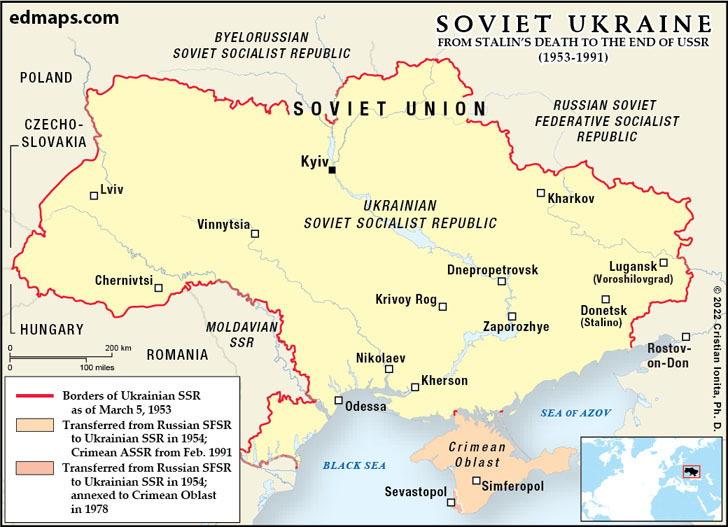
The Crimean Peninsula presented a unique case. Established as the Crimean Autonomous Soviet Socialist Republic in 1921 within the Russian SFSR, not Ukraine, Crimea possessed substantial ethnic diversity, including Tatars, Russians, and Ukrainians. Ukrainian nationalists historically claimed Crimea based on geographic proximity and economic integration, but Soviet administration kept it separate from Ukraine, denying Ukrainian territorial aspirations while maintaining centralized control over this strategically vital Black Sea region.
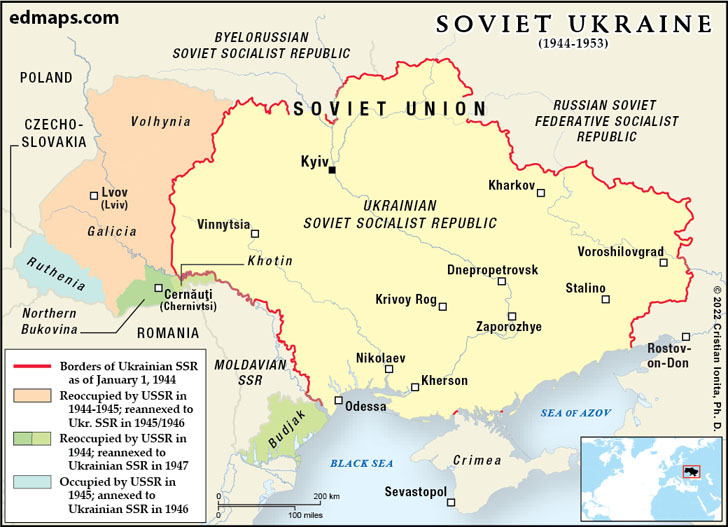
By the late 1930s, Soviet Ukraine existed in profound contradiction: formally a republic with national character, actually subjected to Russification, cultural suppression, and Moscow's absolute authority. Territorial grievances against Poland and Romania remained officially alive, serving Soviet foreign policy objectives while genuine Ukrainian nationalism faced brutal repression. This schizophrenic existence—simultaneously promoting and destroying Ukrainian identity—would define Soviet Ukraine until World War II redrew Eastern Europe's map.
edmaps.com — Historical Cartography for Education
edmaps.com provides original maps and curated historical maps designed to support teaching, learning, and public understanding of territorial evolution and administrative history. The original maps are created by Dr. Cristian Ionita, and all curated maps are selected from public archives, historical collections, and private holdings, and are presented for educational and non‑commercial use.
© Cristian Ionita. All rights reserved.
Website: https://edmaps.com — Contact: info@edmaps.com